
Years of patchwork IT leave a mess that makes every future problem harder and every contractor who walks in start from scratch. We fix that.
Structured, labeled cabling that turns your network room from an obstacle into an asset. Every run is identified, every connection is intentional, and every cable is cut to length and routed cleanly. When something needs to change six months from now, the tech who opens that rack can see exactly what's what.
A complete, accurate record of your infrastructure: IP addressing scheme, VLAN layout, switch port mapping, firewall rules summary, and a full device inventory with make, model, and age. Documentation that lives in a shared location your team can actually find, not in someone's head or on a sticky note on the rack. See our free network documentation workbook for the exact structure we use.
Over time, businesses accumulate servers, software licenses, and hardware that no longer serves a purpose, or that duplicates something else already running. We identify what can be retired, what can be consolidated, and what's consuming resources or budget for no real benefit, and we clean it up cleanly.
End-of-life equipment needs to be handled correctly, not stacked in a closet, and not thrown in the trash with data still on the drives. We perform secure data destruction on every decommissioned device and handle proper disposal, giving you documentation of what was destroyed so you're covered if questions ever arise.
Rack organization, power management, airflow assessment, labeling, and UPS evaluation, everything that makes a server room a real server room rather than a collection of equipment in a closet. We document the layout, address any power or cooling concerns, and leave you with a room that a new tech can walk into and immediately understand.
User accounts, access permissions, and system configurations accumulate garbage over the years, former employees still in Active Directory, shared passwords that haven't changed in a decade, admin rights handed out to solve a problem and never revoked. We audit, document, and clean up the access layer so your environment reflects how your business actually operates today.
The problem with a messy IT environment isn't that it looks bad. It's that it multiplies the cost of everything else. When cabling isn't labeled and documentation doesn't exist, a one-hour troubleshooting job becomes four hours of tracing cables and guessing. When a new contractor walks in, whether it's us, a vendor, or an electrician who needs to understand the panel, they start from zero every time. Nobody owns the problems because nobody fully understands the environment.
We've walked into network closets that looked like somebody had thrown the cables in from across the room. Switches zip-tied to shelves, runs hanging from ceiling tiles, no labels anywhere, three different routers from three different eras all still powered on. Those environments aren't unusual, they're what happens when IT grows organically over years with no one specifically responsible for keeping it organized. Each addition made sense at the time. The result doesn't.
A cleanup project starts with documentation, understanding what's actually there before touching anything. We inventory every device, trace every run, and map the network on paper. That document becomes the foundation for everything that follows: what gets reorganized, what gets replaced, what gets retired.
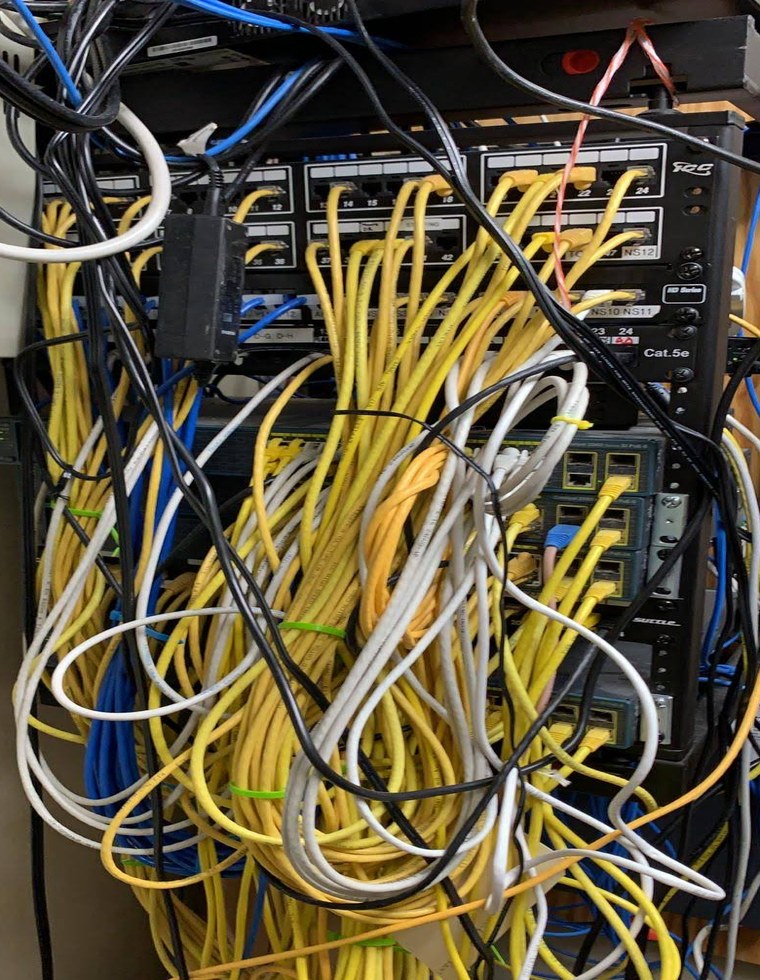
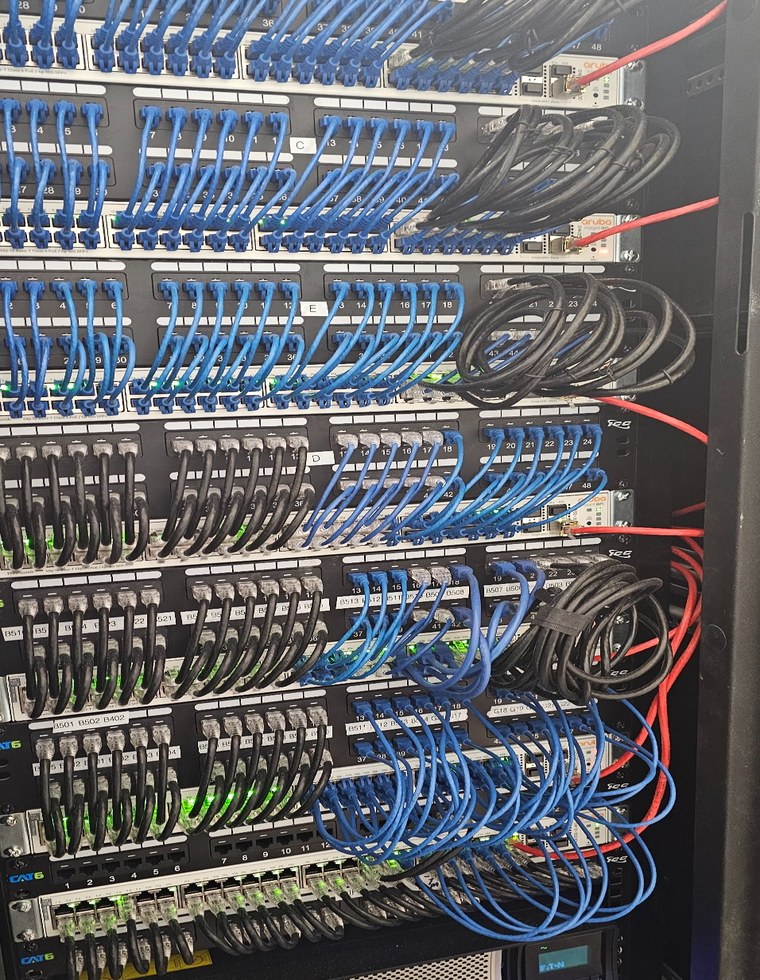
By the end, the after state isn't just cleaner, it's comprehensible. A tech who's never been in that room can walk in and understand the environment in ten minutes.
Network documentation is one of the highest-leverage things a business can have and almost no one has it. IP addressing scheme, VLAN assignments, switch port maps, firewall rule summaries, device inventory with ages and warranty status, when this exists and is accurate, every future project is faster, every problem is easier to diagnose, and onboarding a new IT provider takes hours instead of weeks. It's also the single document most businesses wish they had the moment something goes wrong.
It depends heavily on the size of your environment and how much has accumulated over the years. A small office network room cleanup with documentation typically runs 1–2 days of on-site work. A larger environment with multiple racks, a full cabling redo, extensive documentation, and system decommissioning can run a week or more. We scope every project before we start so you know the time and cost commitment upfront, no open-ended billing.
We plan around your business. For cabling work that requires moving live connections, we schedule that portion during off-hours, evenings or weekends, to minimize any impact. Documentation, inventory, and non-disruptive work happens during business hours. We communicate the plan clearly before any work begins so you know exactly when any brief service interruptions will occur and can plan accordingly.
At minimum: a complete device inventory (every switch, router, server, firewall, and WAP with make, model, IP address, and approximate age), your IP addressing scheme and subnet layout, VLAN assignments and purpose, switch port mapping (which port connects to what), firewall rule summary, and wireless network details. We store this in a format your team can access and update, not a PDF buried in someone's email. For managed clients, we keep it current as changes are made. Our free network documentation workbook covers this exact structure if you want to start documenting your own network.
Yes, that's most of what we do. We've walked into rooms with unlabeled cables running in every direction, equipment from multiple generations all live and untouched, and no documentation of any kind. The process always starts the same way: inventory everything, understand the network as-built, then systematically clean, label, and document. The messier the starting point, the more valuable the result, because the gap between before and after is larger.
The cleanup itself is a project, a defined scope with a start and end. Most businesses that go through a cleanup then move to a managed IT relationship with us, which means the documentation stays current and the environment doesn't drift back into disorganization. If you're not interested in managed support afterward, the deliverables, organized infrastructure and complete documentation, are yours and will keep your environment in good shape for years with normal maintenance.
We've walked into network rooms that looked like spaghetti and turned them into something a new tech can understand in 10 minutes. Yours is fixable.